
BlogCorporate Retreats
Why a Private Estate Beats a Hotel Ballroom for a Team Offsite
Key Takeaways
- A hotel ballroom rents you a room by the hour. A private estate gives your team a place that is theirs for the whole stay, which changes how people show up.
- The real cost of a ballroom offsite is the friction: scattered rooms, shared elevators, a restaurant wait every meal, and a hard stop when the next booking arrives.
- One house with two wings keeps the team together for the work and gives people room to breathe after it, which is where the actual team-building happens.
- A kitchen, a living room, a theater, and a golf simulator under one roof mean the schedule bends to your plan instead of the venue’s.
- For a small leadership team, a private house often lands near the all-in cost of a block of hotel rooms plus meeting-room fees, with far more to show for it.
Book a hotel ballroom and you get a room. Book a private house and you get a place your team actually wants to be. That difference sounds soft until you have watched both play out, and then it is the whole ballgame. The offsites people remember, the ones that change how a team works together, almost never happen under fluorescent lights next to a folding-table coffee station.
If you are planning a leadership offsite or a team retreat, the venue decision quietly sets the ceiling on everything else. Here is why a private estate tends to raise that ceiling, and when a hotel still makes sense.
What a ballroom actually costs you
The daily rate is the smallest part of the bill. The real cost of a hotel offsite is friction, and friction is where energy and good conversation go to die.
Your team scatters to rooms on different floors. Breakfast means waiting for a table and reassembling a group that has already splintered. The meeting space is booked until five, so the session that was finally getting somewhere gets cut off because another group needs the room. Every transition leaks momentum, and a two-day offsite is mostly transitions.
None of it is a disaster on its own. Added up across two days, it is the difference between a team that stayed locked in and a team that spent half its energy just regrouping.
Why one house changes the dynamic
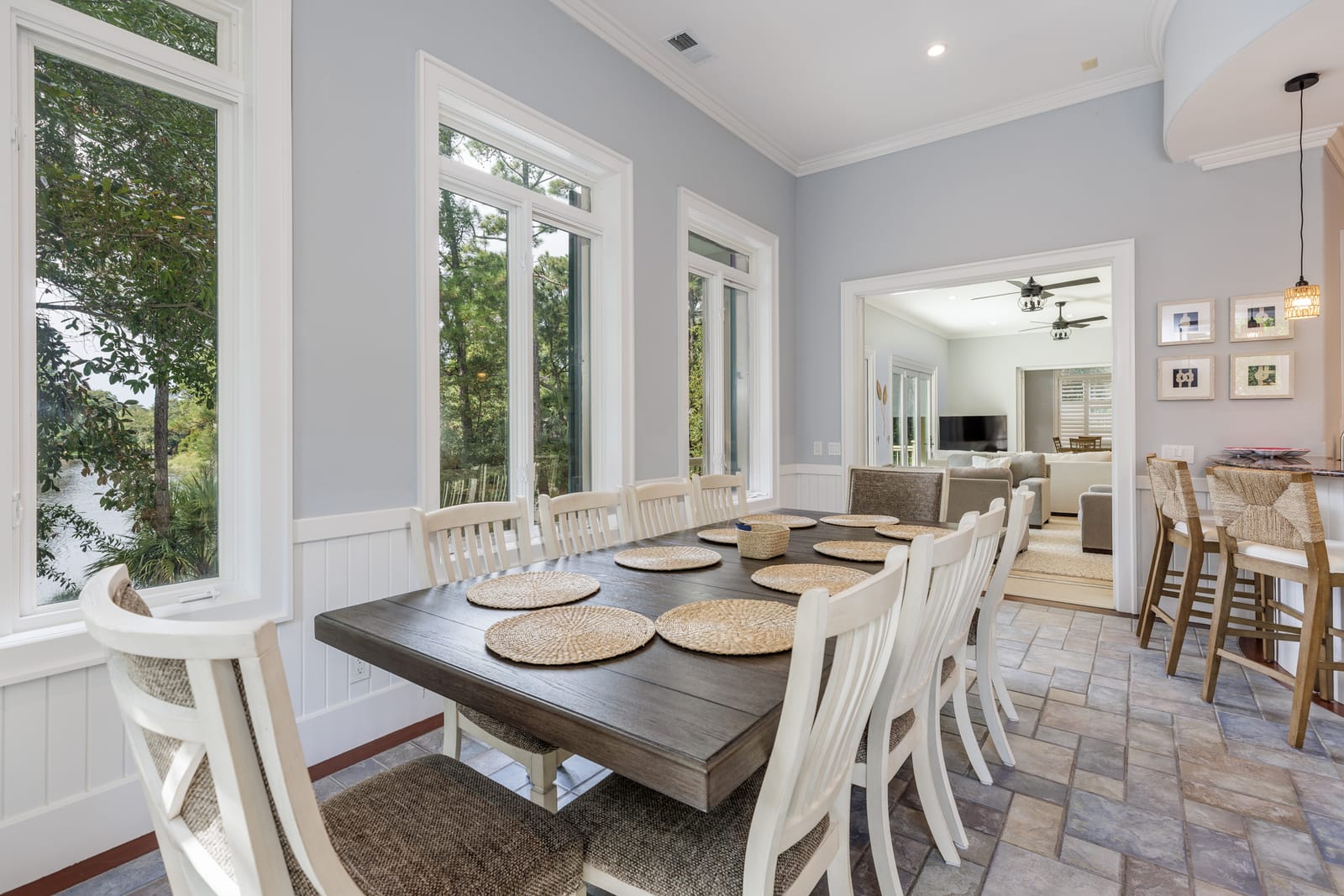
Put the same group in a single estate and the friction disappears. Everyone is under one roof. The work happens in a real living room or a dedicated library where a quiet planning session can actually stay quiet. When the session ends, no one drives anywhere. They wander to the pool, start a game in the billiards room, or keep the conversation going on the lanai, and that unstructured time is where colleagues turn into a team.
The layout is the quiet advantage. Two separate wings mean the group can gather for the working session and then give people genuine space afterward, so an introvert gets to recharge and the night-owls do not keep the early risers awake. A house with seven suites that comfortably hosts a team of up to eighteen does something a corridor of identical rooms cannot: it keeps the group together without forcing them on top of each other.
If this, then a house
The clearest way to choose is to match the venue to what your offsite needs to do.
- If the goal is candid strategy, then you want a private living room or library, where the conversation stays inside the group.
- If you want the team to actually bond, then you need shared downtime in a shared space, which a block of separate hotel rooms structurally prevents.
- If the agenda mixes work and recreation, then one property with a theater, a game room, and a golf simulator lets you pivot without loading everyone into cars.
- If you are feeding the group, then a chef’s kitchen and one big table beats a restaurant reservation that splits the room and runs on the restaurant’s clock.
- If you need people focused, then a distraction-free setting away from a busy resort lobby keeps the team in the room, literally and mentally.
Does a private estate really cost more?
Not as often as people assume. Line up the full hotel bill, including every add-on, and the gap narrows fast. A hotel offsite means a block of rooms, a separate meeting-space rental, catering markups, and usually a few restaurant dinners for the group. A house folds lodging, meeting space, and a kitchen into one number.
For a leadership team or a mid-sized group, a private estate frequently lands in the same range as the all-in hotel cost, and you get the pool, the courses nearby, and the shared space instead of a parking validation. For a conference of two hundred, a hotel still wins. For the offsites most teams actually run, the math is closer than the ballroom sales deck wants you to think.
What to look for in a retreat house
Not every large rental is built for a working group. The ones that are share a few traits: a genuine indoor space for the session; a kitchen that can feed everyone without a catering contract; enough separation that people can step away; and professional management so a maintenance question at 7 a.m. is handled by someone else.
Our own estate in Palmetto Dunes was set up with exactly this in mind, which is why it works as well for a sales kickoff as it does for a family reunion. You can see how we think about it on our corporate retreats and leadership offsites pages, and our guide to planning a fourth-quarter retreat walks through the timing in detail.
Frequently Asked Questions
Can a private house really handle a real working session?
Yes, when it is built for it. A dedicated living room or library gives you a space for strategy and planning that a shared hotel meeting room, booked by the hour, cannot match. The key is choosing a house with genuine common space for the whole group.
How large a team fits in a single estate?
It depends on the property. A seven-suite house with two wings comfortably supports a team of roughly a dozen to the high teens for both the work and the overnight stay, which covers most leadership offsites and mid-sized retreats.
What about meals for the group?
A chef’s kitchen and a large dining table let you cook, cater, or bring in a private chef on your own schedule. That flexibility beats booking a restaurant block every night, which splits the group and runs on someone else’s timing.
Is a house harder to manage than a hotel?
Not when it is professionally managed. A well-run estate handles the logistics a hotel would, so your only job is running the offsite itself rather than fielding operational questions.
The venue you choose sets the tone before anyone arrives. If you want your team genuinely together, focused during the work and relaxed after it, a private estate is hard to beat. When you are ready to compare dates and plan the details, you can check availability and rates or tell us about your retreat.