
GuideCorporate Retreats
Planning a Fourth Quarter Corporate Retreat on Hilton Head Island
Key Takeaways
- Fourth quarter offsites get decided in late summer, so the strongest venues for October through December book while most teams are still finishing their planning.
- A private estate gives a team a room to work in, a table to eat at, and beds under one roof, which removes the daily reassembly a hotel-and-restaurant plan forces on you.
- Build the agenda around two or three real work blocks and protect the rest for the unstructured time where teams actually bond.
- Hilton Head in the fourth quarter runs cooler and quieter than peak summer, which suits a working group better than a beach-week crowd.
- The 7-bedroom estate at Palmetto Dunes sleeps up to 18 across two wings, with a library and living room that double as breakout space.
Your fourth quarter offsite is really a late-summer decision. The calendar looks far away in August, but the venues that hold a full team comfortably, the flights that land at a civil hour, and the shoulder-season rates all get claimed months ahead. If you are the person tasked with finding somewhere for a team of twelve to actually think for two days, the work starts now.
Hilton Head Island earns a second look for exactly the group most retreat guides ignore. Most content here is written for a couple or a family of four. Almost none of it is written for a leadership team that needs a working session, a shared dinner, and a place to sleep without splitting into three hotels. That gap is the opportunity.
Why a house beats a hotel ballroom for a small team
A hotel gives you a rented room by the hour and a parking lot of distractions on the way back to it. Every morning the team reassembles from scattered rooms, every meal is a logistics exercise, and the “offsite” never quite leaves the orbit of the front desk.
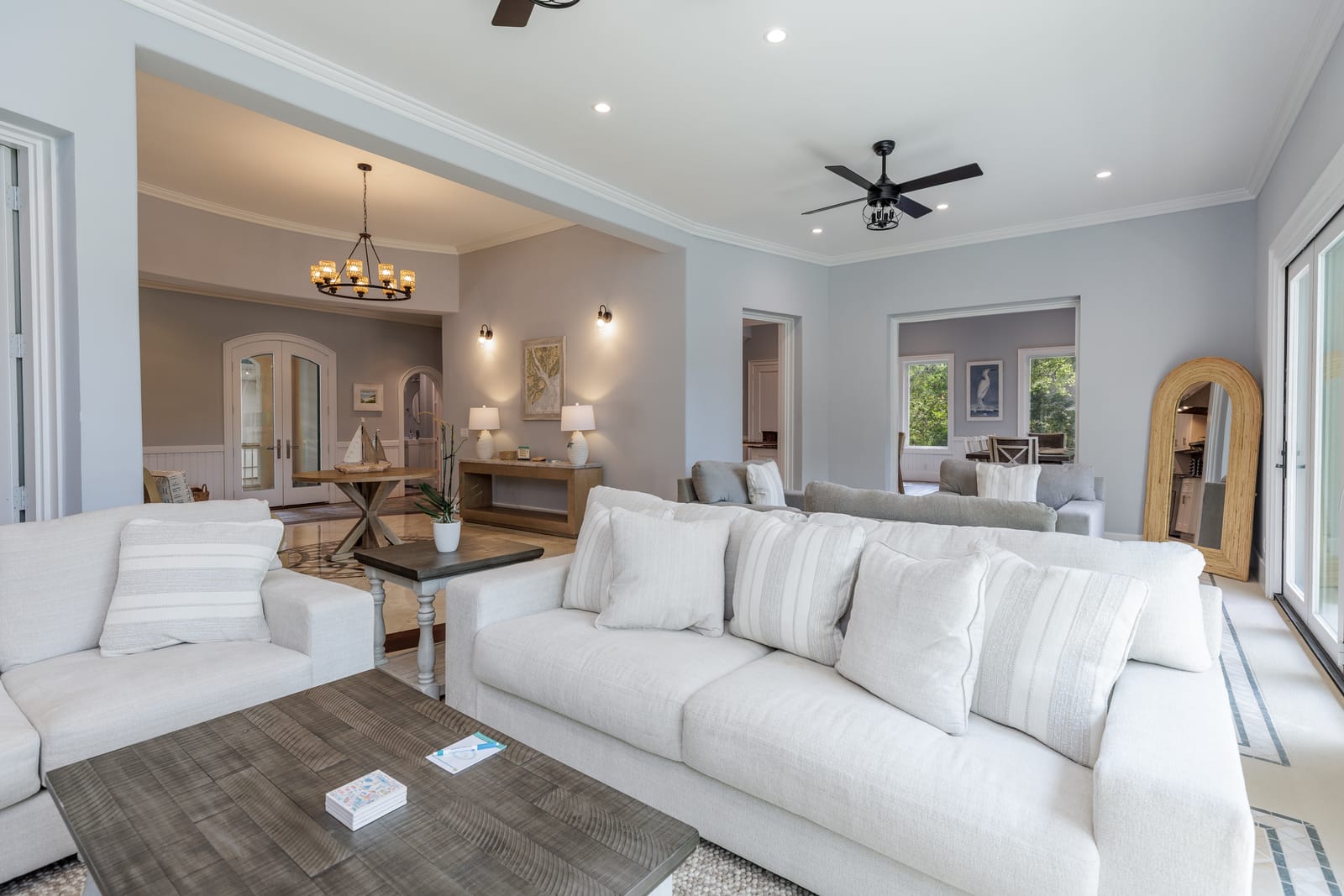
A private house collapses all of that into one footprint. You wake up in the same building, walk to coffee, and start. The working session happens in the living room or the library. Lunch happens on the lanai. The evening happens around a table you did not have to book. Nobody is watching a clock that belongs to a catering department.
For a group of eight to eighteen, that continuity is the whole point. The best conversations at a retreat rarely happen inside the scheduled block. They happen in the kitchen at 9 p.m. when two people are still talking through a problem. A house gives those moments a place to land.
What the fourth quarter actually looks like on the island
Fall on Hilton Head is the island’s quiet reward. The summer crowd thins after Labor Day, the beaches empty out, and the weather settles into long, mild days that are far better for a walking meeting than a July afternoon. October and November are shoulder season, which means a calmer island and more room to move.
That calm matters for a working group. You are not fighting resort traffic to get to dinner or elbowing for space at Coligny Beach. You can hold a session, break for a walk along the sand, and be back at the table without losing the afternoon. Shelter Cove Marina is close for a group dinner out when you want one, and Harbour Town is a short drive when the team wants a change of scene.
If your retreat leans into golf, the Leamington and Robert Trent Jones courses run through the fall, and a covered golf simulator on site means weather never cancels the round you planned as a team activity.
A two-night agenda that respects people’s time
The most common retreat mistake is over-programming. A packed grid of sessions leaves everyone drained and resentful by the second afternoon. Plan fewer, deeper blocks and defend the open time.
- Evening one, arrival and dinner. No agenda. Let people land, unpack, and eat together. A shared first meal does more for the next day than any icebreaker.
- Morning one, the one big topic. Put your single most important conversation in the first work block, when the group is fresh. Two to three hours, one subject, a clear question to answer.
- Midday one, break and move. Lunch, then real downtime. A walk on the beach, a round on the simulator, a nap. This is not filler. It is where the morning’s ideas settle.
- Afternoon one, working groups. Split into small groups on separate parts of the problem, then reconvene. Two wings and multiple common rooms make this easy in a house and impossible in a single hotel suite.
- Morning two, decisions and owners. End on commitments, not discussion. Who owns what, by when. Then let people travel home while it is still fresh.
Notice how much of that grid is deliberately empty. The structure exists to protect the unstructured time, not to fill it.
Feeding and hosting the group without a catering contract
A team eats well when the space makes it easy. A chef’s kitchen with an eight-burner range and a dining table sized for the whole group means you can cater one night, cook another, and order in a third without anyone feeling stranded. The estate keeps a roster of add-ons for exactly this, including a private chef and a bartender for the evening you want to hand it off entirely.
The point is optionality. Some retreats want every dinner catered so the team never touches logistics. Others bond over cooking together on arrival night. A house lets you choose per meal instead of committing to a hotel’s banquet menu for the whole stay.
The venue that holds all of it
When the plan needs a home, the 7-bedroom estate at Palmetto Dunes is built for this group. Seven suites across two separate wings sleep up to 18, so senior leaders and the wider team each get privacy under one roof. A library gives you a quiet room for a small executive session while the living room hosts the full group. The golf simulator, game room, and home theater cover the evenings and any weather the fourth quarter throws at you.
Frequently Asked Questions
How far ahead should we book a fall corporate retreat on Hilton Head?
For an October through December offsite, start in late summer. Large private homes that sleep a full team are the first to fill for shoulder season, and early planning also gives you better flight options into Savannah/Hilton Head International Airport.
Is Hilton Head a good place for a working retreat?
Yes, and the fall makes it better. The quieter shoulder season removes the resort crowd, and a private estate gives you dedicated work space, shared meals, and lodging in one place, which a hotel cannot match for a group this size.
How many people can the estate host for a retreat?
The estate sleeps up to 18 across seven suites and two wings, with a chef’s kitchen and oversized dining table for group meals and multiple common rooms that work as breakout space.
What is there to do on the island as a team?
Golf on the Leamington and Robert Trent Jones courses, a group dinner at Shelter Cove Marina, beach walks in the mild fall weather, and an on-site golf simulator and game room for downtime and weather backups.
Start with the space, then build the plan
The agenda is the easy part. The hard part is finding one place that can hold the work, the meals, and the sleep for a full team without turning every day into a logistics puzzle. Solve that first and the rest of the retreat plans itself. When you are ready to look at dates, you can check availability and rates or tell us what your team needs and we will help you plan your retreat.