
GuideCorporate Retreats
How to Build a Two Night Corporate Retreat Agenda That Actually Works
Key Takeaways
- A two-night retreat gives you one full working day framed by a travel-in evening and a travel-out morning, so the agenda has to respect that real shape rather than pretend you have three days.
- The best offsite agendas alternate focused work with genuine downtime, because a team that never stops thinking stops thinking well by mid afternoon.
- Put the hardest strategic conversation in the first morning, when the group is fresh, and save looser planning and relationship time for later.
- White space on the schedule is a feature, and it is where the useful side conversations actually happen.
- A private house with real work space and room to relax in the same place beats a hotel ballroom for a small team, because the day never has to reset around other guests.
Most corporate retreat agendas fail the same way. They are packed so tight that by two in the afternoon on day one, the team is nodding along and absorbing nothing. The goal of an offsite is not to fill every hour. It is to get a small group to think clearly together, and clear thinking needs room to breathe.
If you are planning a two-night retreat for a team of eight to fifteen, here is how to build an agenda that actually works, the kind people talk about afterward for the right reasons.
Start with the real shape of a two-night trip
Two nights sounds like three days. It is not. You arrive on the first evening, you have one true working day in the middle, and you leave on the third morning. Building an agenda that ignores this is the first mistake, because it crams strategic work into travel-frazzled arrival hours or a checkout-day rush.
Respect the shape instead. The arrival evening is for settling in and a relaxed dinner. The full middle day carries the real work. The departure morning is for landing decisions and assigning who owns what. Plan against that structure and the whole thing gets calmer.
A two-night agenda that breathes
Here is a sample framework for a team offsite. Adjust the topics to your group, but keep the rhythm of work, break, work, and something physical.
Day one, evening
- Arrive and settle into the house
- Group dinner together, no agenda, just the team in one room
- Optional short kickoff after dinner: the one question this retreat exists to answer
Day two, morning
- Slow breakfast, everyone at their own pace
- The hard session first: the biggest strategic question, while the group is sharp
- A real break, outside if the weather allows
Day two, afternoon
- A working lunch only if the group has energy for it, otherwise a genuine lunch break
- A second, lighter session: turning the morning’s direction into concrete plans
- Free block in the late afternoon: the pool, a bike ride, a round on the golf simulator, or a walk
Day two, evening
- Dinner out or a catered meal at the house
- Unstructured time, which is where trust actually builds
Day three, morning
- Breakfast and a final short session: decisions, owners, and next steps
- Depart
Notice how much is not scheduled. That is deliberate.
Put the hard conversation first
Teams have the most clarity and the most patience in the first working morning. That is when to tackle the conversation that brought everyone here, whether it is next year’s strategy, a hard tradeoff, or a reset after a rough quarter.
Pushing the big question to the afternoon, or worse to day three, is a common error. By then energy is lower, the clock is louder, and the group rushes the exact discussion that justified the whole trip. Lead with it while the room is fresh.
Build in white space on purpose
A packed agenda feels productive to the person who wrote it and exhausting to everyone living it. The most valuable moments at a retreat are often the unplanned ones: the walk where two colleagues finally align, the poolside conversation that surfaces the real concern nobody raised in the session.
Those moments only happen if the schedule leaves room for them. Protect a genuine free block every afternoon and keep at least one evening completely open. Trust that the work you did in the morning keeps working in the background while people relax.
Pair the work with something physical
A team that sits in one room all day gets stale. Moving the body resets the mind, and it does not have to be a forced team-building exercise nobody enjoys. A round on a golf simulator, a bike ride down to the beach, a game of pool after dinner, or simply an afternoon by the water does the job better than a trust fall ever did.
The trick is to make it available, not mandatory. Give people the option and the space, and the group will use it in the way that suits them.
Why a house beats a ballroom
For a small team, a private estate changes the feel of the whole retreat. In a hotel, the day resets every time you leave the meeting room and walk through a lobby full of strangers. In a house, the team stays in one shared world from breakfast to the late-night conversation on the porch.
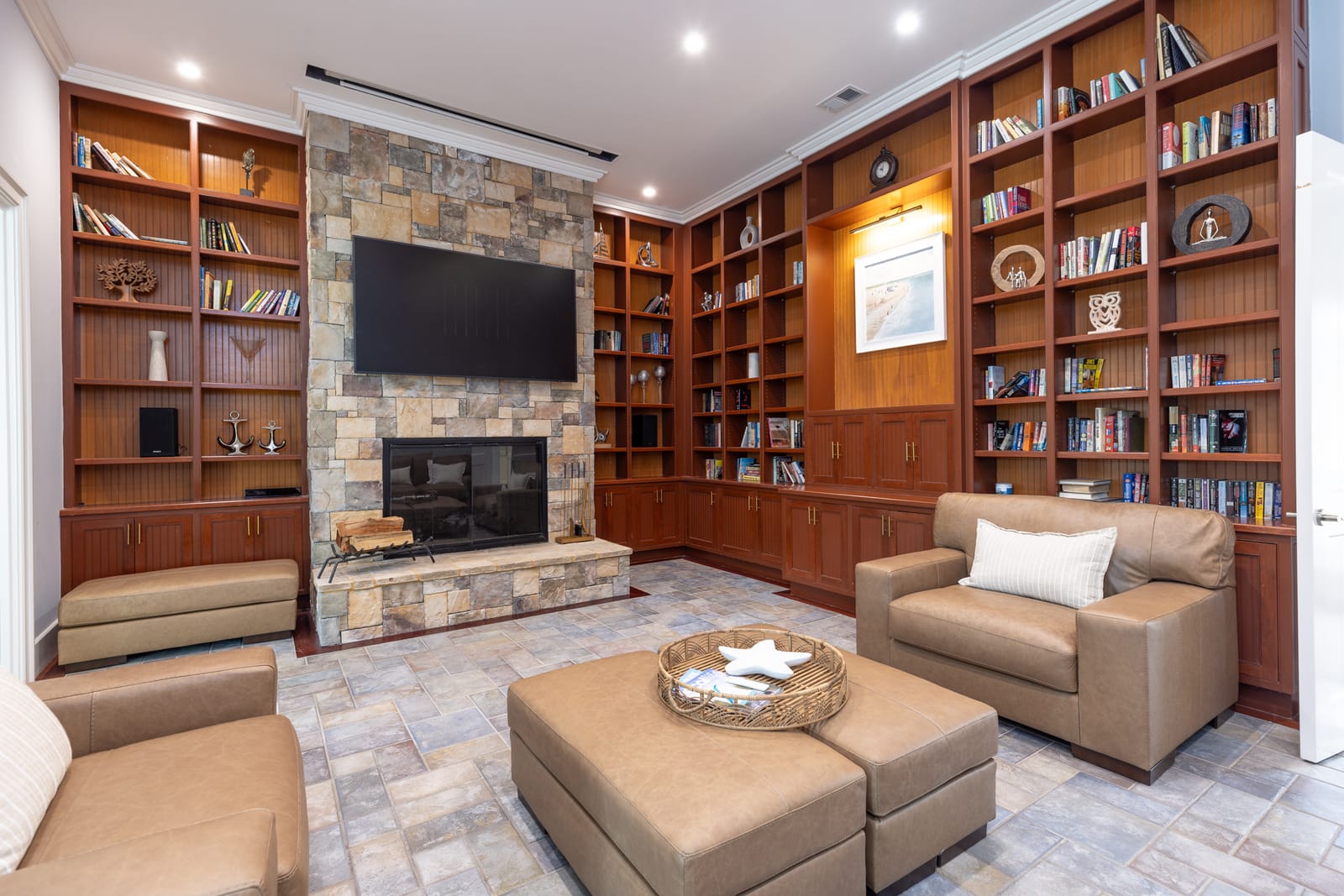
That continuity is the point. At 25 Starboard Tack in Palmetto Dunes, the library and main living space give a small group real room to work, the golf simulator and game room handle the afternoon reset, and two separate wings mean people can retreat to their own space at night and come back fresh. The chef’s kitchen and big dining table keep meals together and easy. Everything the agenda needs sits under one roof, which is exactly why the schedule can stay loose without falling apart.
If Q4 planning is what is driving this, our companion piece on planning a fourth quarter corporate retreat covers the budgeting and timing side that sits underneath the agenda.
Frequently Asked Questions
How many sessions should a two-night retreat have
Three is plenty. One hard strategic session the first morning, one planning session in the afternoon, and a short wrap-up on departure morning. More than that and the group stops absorbing.
Should meals be part of the agenda or a break from it
Mostly a break. Keep dinners unstructured so the team can connect without an agenda. A single working lunch is fine if energy is high, but do not turn every meal into a meeting.
Is a house really better than a hotel for a small team
For a small group, yes. A private house keeps the team in one continuous space, removes the constant reset of moving through public areas, and gives you work space and downtime in the same place. A hotel makes more sense only for very large groups that need conference infrastructure.
How much free time is too much
You will almost never err on the side of too much. Protect a real afternoon block and one open evening. The unscheduled hours are where alignment and trust actually form, so treat them as part of the work.
A retreat that breathes gets more done than one that sprints. Build around the real two-night shape, lead with the hard question, and leave room for the conversations you cannot schedule. When you are ready to give your team a private place to do that, explore a corporate retreat at the estate and start planning your dates.